A veneer is a thin ceramic shell bonded to the front of a tooth to change its shape, length or colour. Porcelain veneers are an invasive cosmetic procedure that permanently alters tooth structure. Our dentists custom-design each veneer and will assess whether veneers are appropriate for your teeth — read the risks before you decide.

The Treatment
A veneer is a thin piece of porcelain that covers the front surface of a tooth to change its appearance — its shape, length, or colour. Veneers are one option a dentist may discuss for teeth that are worn from grinding or erosion, chipped or uneven teeth, spacing between teeth, and discolouration that does not respond to whitening. They are not the only option, and they are not necessary for everyone.
Veneers change the appearance of teeth without moving them, so treatment usually involves fewer appointments than orthodontic options such as Invisalign or other clear aligners. Unlike orthodontics, however, veneers are an invasive cosmetic treatment: where a tooth is prepared, enamel is removed and that change is permanent and cannot be reversed. Your dentist will assess your teeth, gums and bite and discuss the risks and alternatives with you before any treatment is planned.
Veneer Packages
We group the stages of veneer treatment into packages so the cost is clear up front. Each package includes a consultation, hand-crafted ceramic veneers from a local lab, take-home or in-chair whitening, and a custom night guard. The number of veneers that is appropriate for you, if any, is a clinical decision made after assessment — not a package you select.
Covers the teeth most commonly visible when smiling, for consistency of shape, length and colour.
Covers a wider span of visible teeth. Suitability depends on your bite, gum health and remaining tooth structure.
Every mouth is different — your dentist will assess your teeth and discuss how many veneers, if any, are appropriate.
Veneer costs vary between patients (generally $1,000–$1,800 per tooth). Payment plans available with monthly repayments, easy setup and no credit checks. Offer terms apply — book a complimentary consult so your dentist can assess your suitability.
How it works
Veneer treatment is generally carried out across three appointments, guided by 3D digital design.
We discuss what you would like to change, examine your teeth, gums and bite, and use 3D design software to prepare a digital plan. A 3D-printed "trial smile" allows you to preview proposed tooth shape and length before treatment starts. A trial smile is an indication of a plan, not a guarantee — the final result may differ. Your dentist will also explain the risks and any alternatives at this appointment.
We prepare the teeth — often around half a millimetre of enamel, and in some cases none at all — then take moulds and digital impressions. Any enamel removed cannot be replaced, and a prepared tooth will require a veneer, crown or other restoration from then on. Impressions go to our lab where your veneers are hand-layered, and you'll wear temporaries in the meantime.
We remove the temporaries and bond your final veneers using a dental adhesive, then check the fit and your bite and adjust as needed. Some sensitivity or tenderness after this appointment is common. We'll explain how to care for your veneers, what to avoid, and what to do if one chips or debonds.
What veneers can do
Important information
Porcelain veneers are an invasive cosmetic dental procedure. Before agreeing to treatment you should understand the risks, which include:
Any surgical or invasive procedure carries risks. Individual results vary and are not guaranteed. Before proceeding, you should seek a second opinion from an appropriately qualified health practitioner, and discuss the risks, alternatives and full costs with your dentist.
Good to know
With proper maintenance and oral hygiene, porcelain veneers can last from 10–15 years. Brush and floss daily, keep up your regular check-ups and cleans, and avoid chewing hard objects like ice to protect them.
The amount of tooth structure removed is often as little as half a millimetre or less — roughly the thickness of a fingernail. Thanks to our digital planning the amount of tooth structure removed is kept to the minimum the case allows, and in some cases no preparation is needed at all. Where a tooth is prepared, however, that change is permanent and cannot be reversed, so your dentist will talk this through with you before you decide.
Costs vary between patients depending on the configuration, generally ranging from $1,000 to $1,800 per tooth. We also offer veneer packages and payment plans. Book a consultation for an accurate quote specific to your needs.
Real results


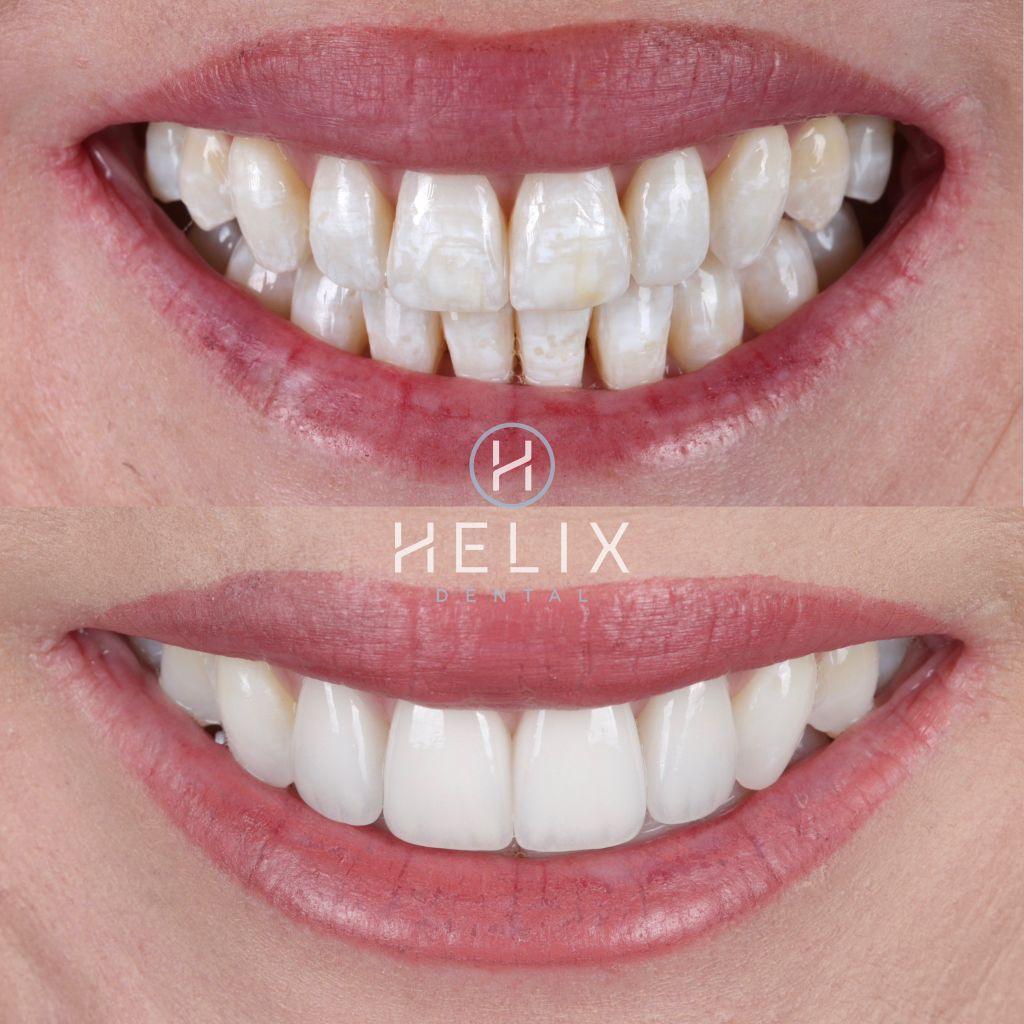
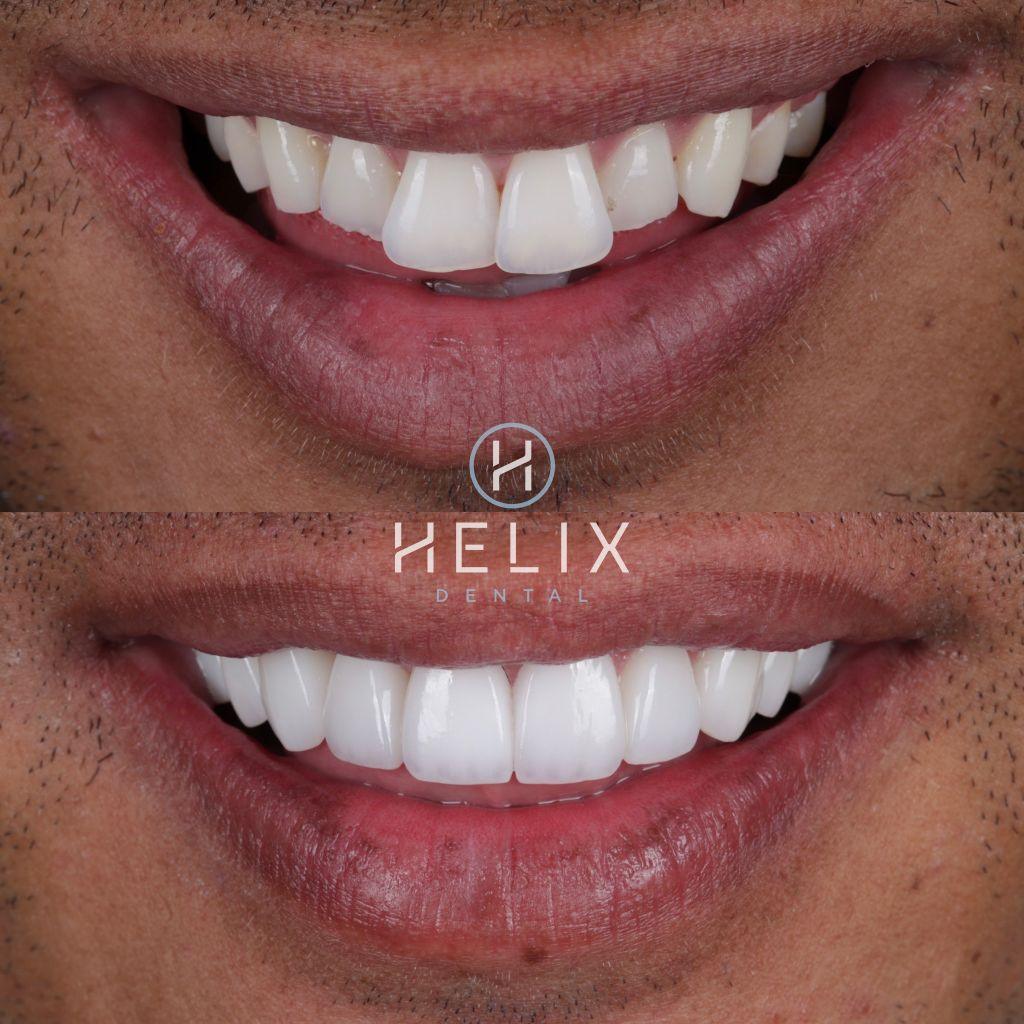
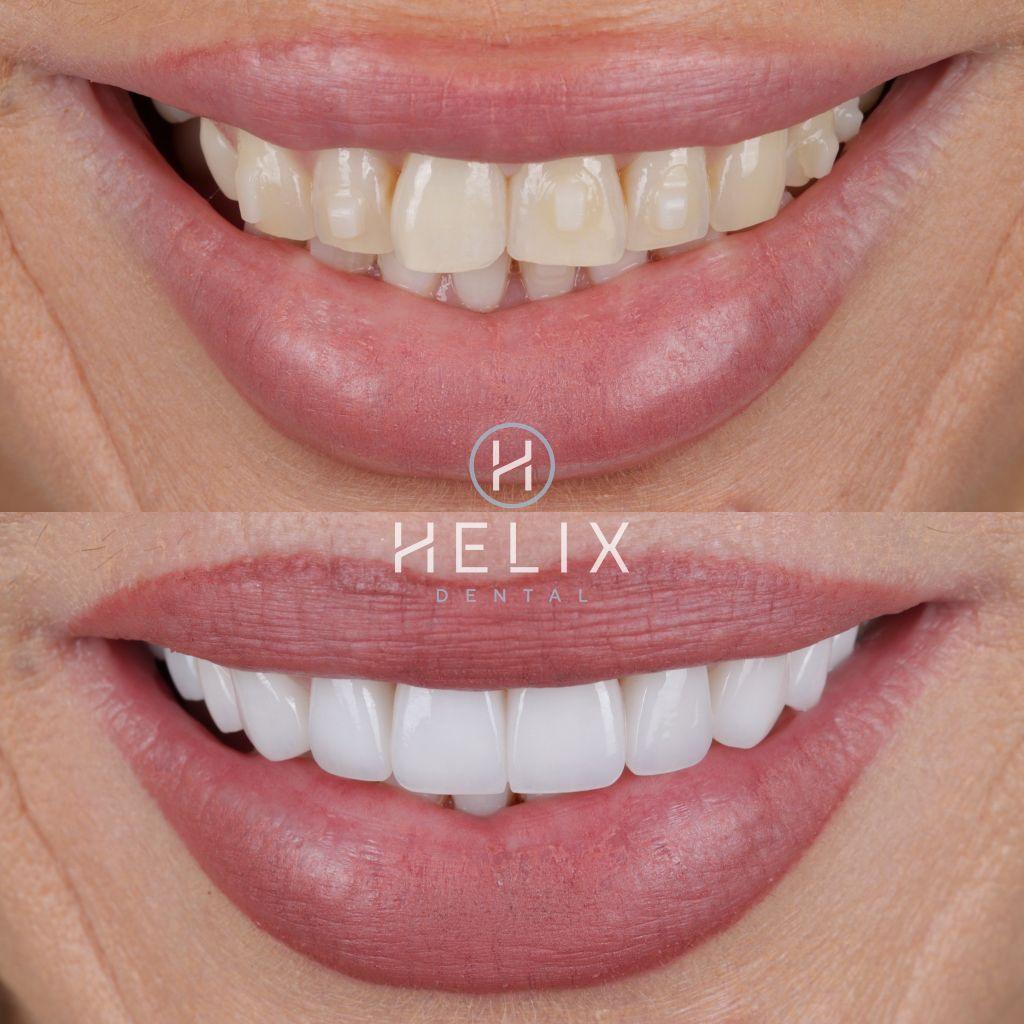
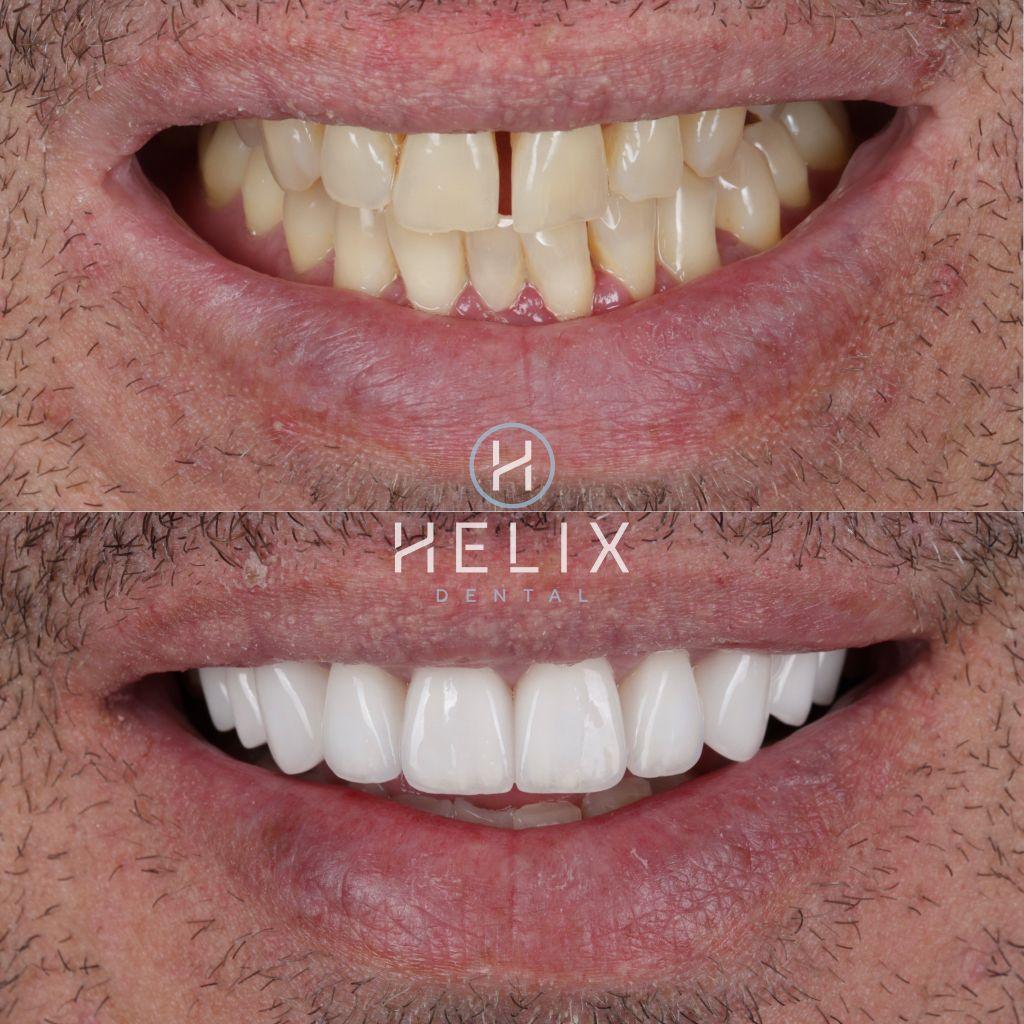
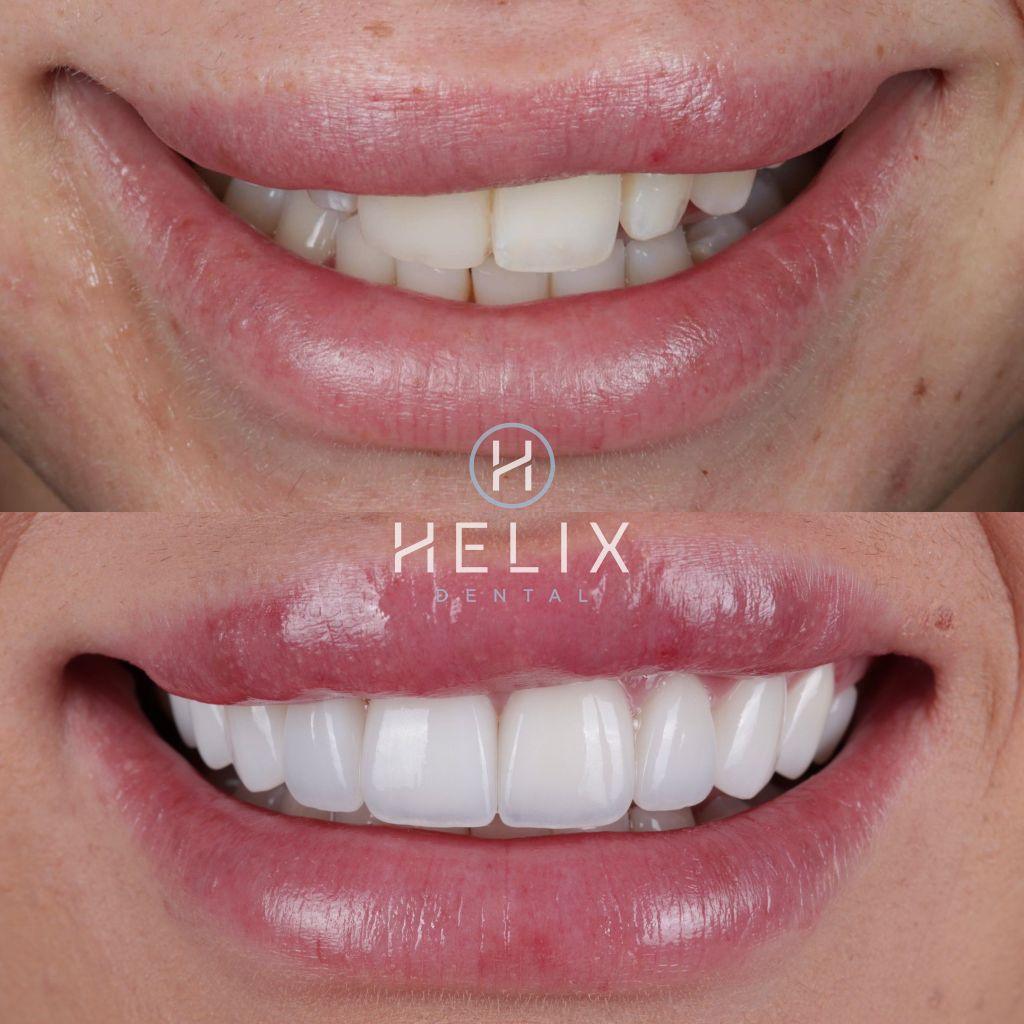
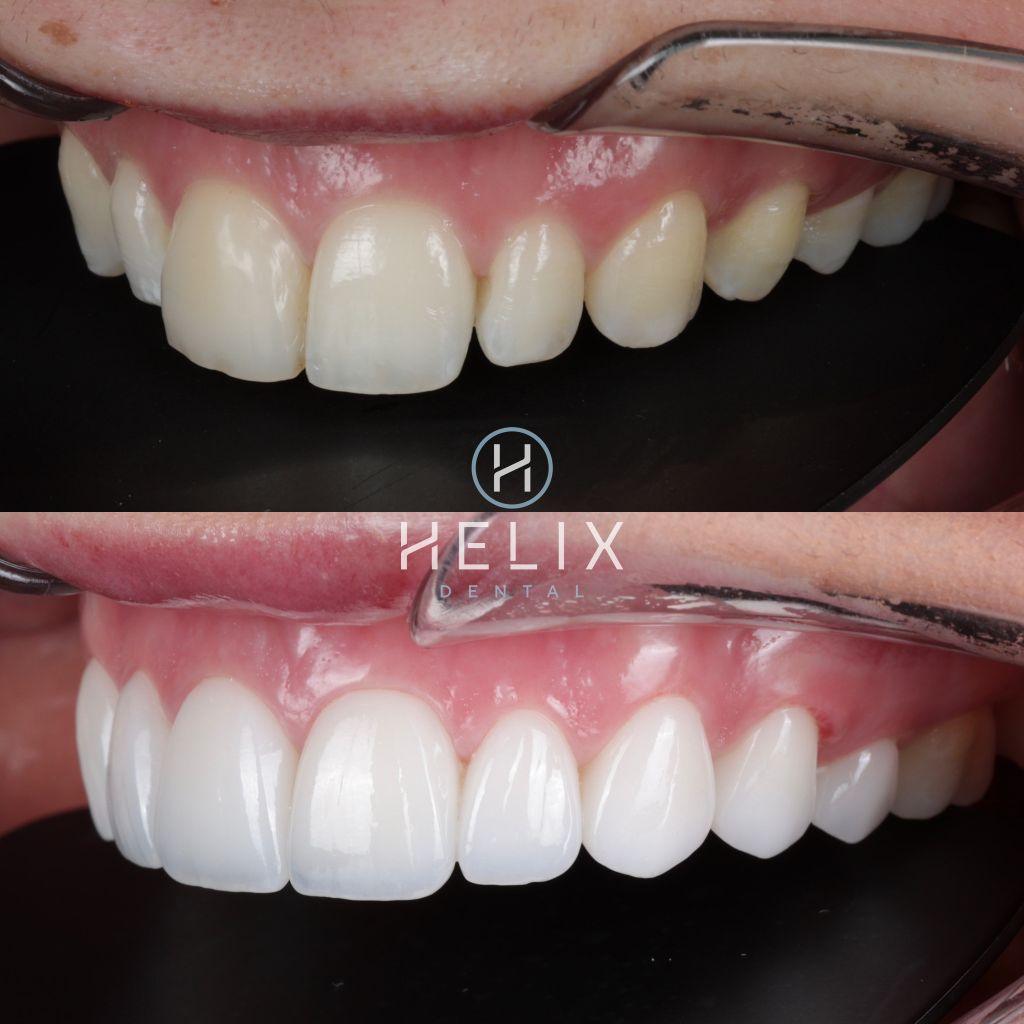
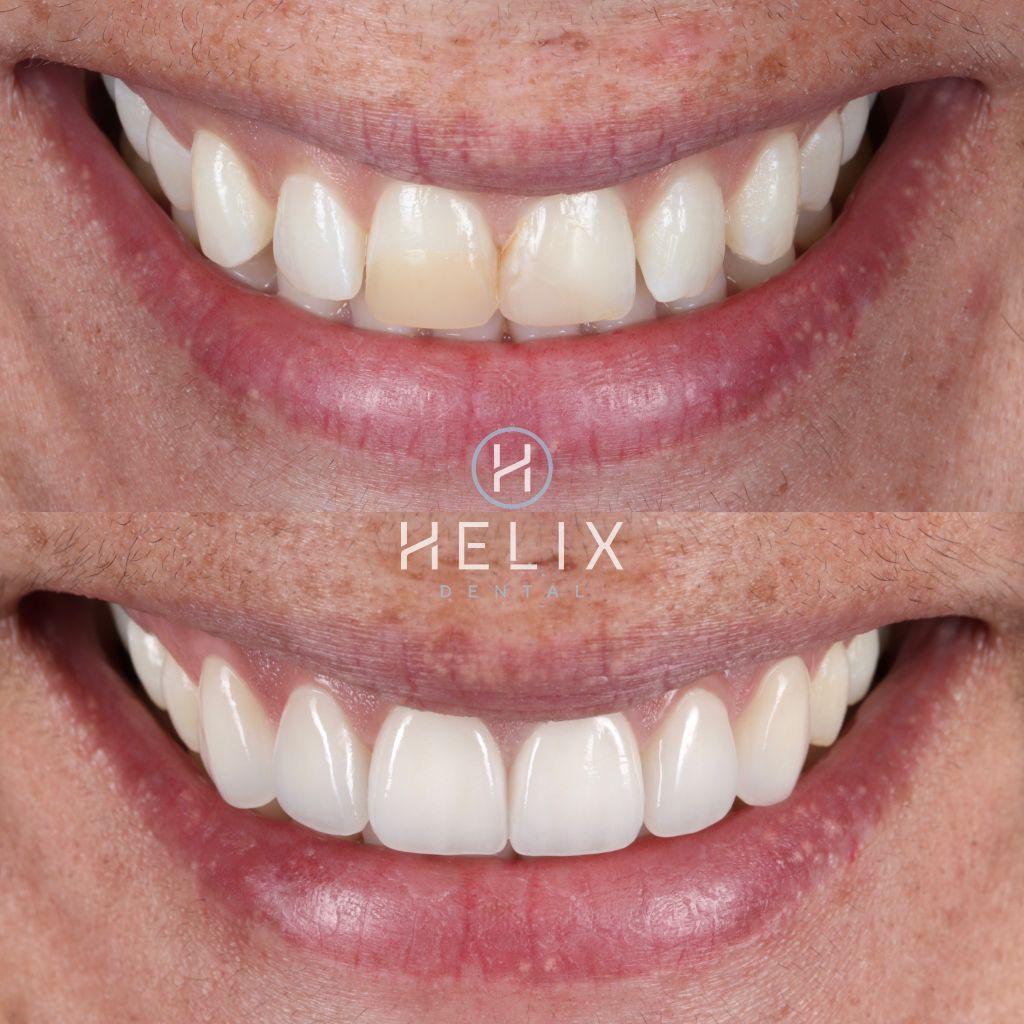
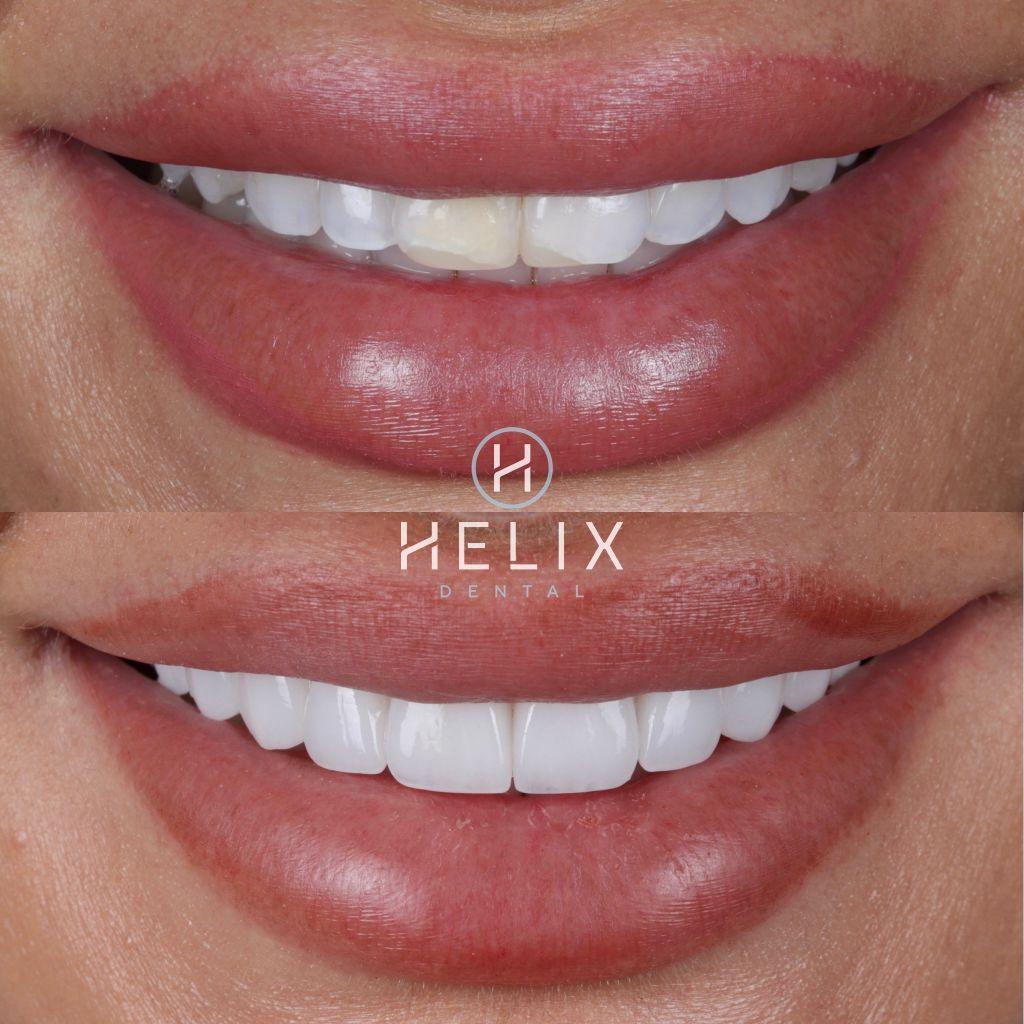
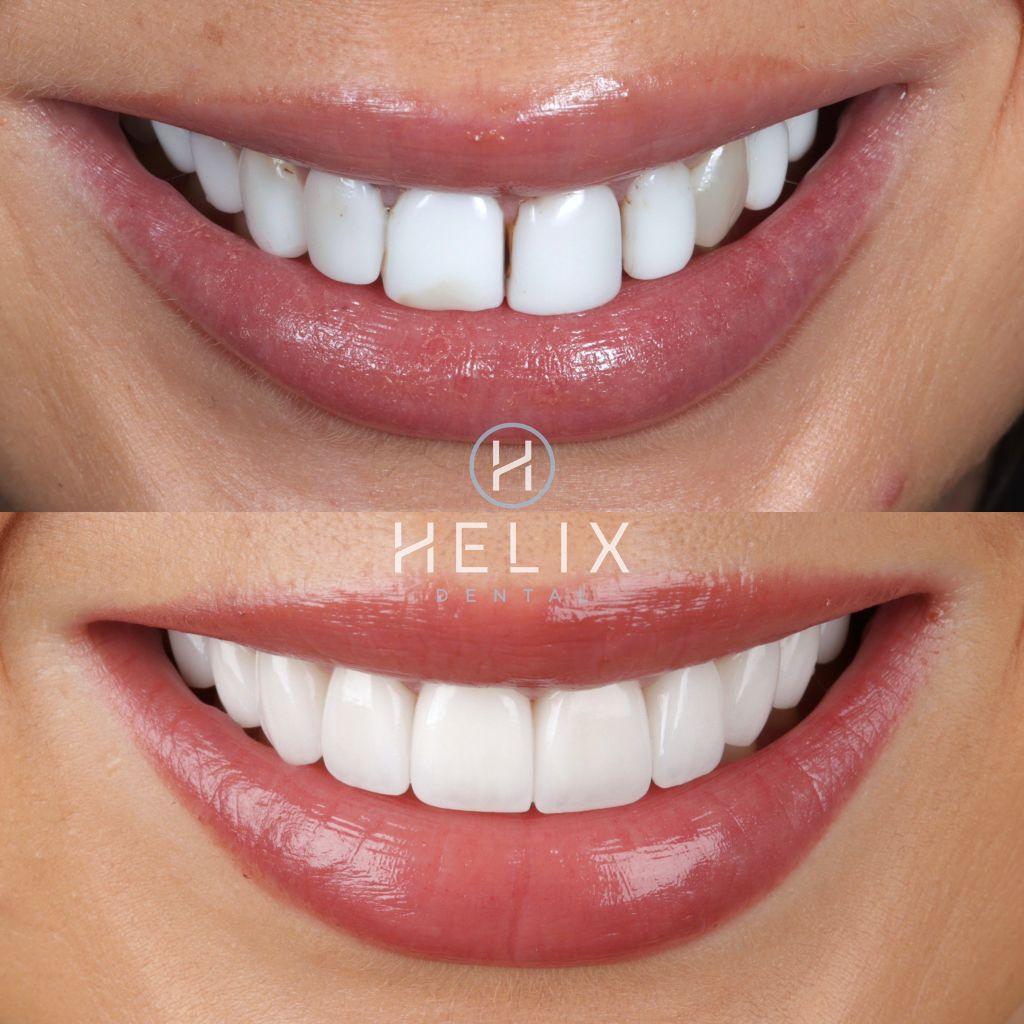
About these photographs. These are unretouched before-and-after photographs of individual Helix Dental patients, published with each patient’s authorisation. Results vary from person to person and are not guaranteed — the outcome shown may not be typical or achievable for you. Porcelain veneers and composite bonding involve altering tooth structure; veneer preparation is irreversible and carries risks including sensitivity, chipping, debonding and future replacement. A clinical assessment is required to determine whether any treatment is suitable for you.
Any surgical or invasive procedure carries risks. Before proceeding, you should seek a second opinion from an appropriately qualified health practitioner.
To find out more about porcelain veneers with our Gold Coast dentists, get in touch on 07 5572 8969 or email hello@helixdental.com.au.
Book a Consult