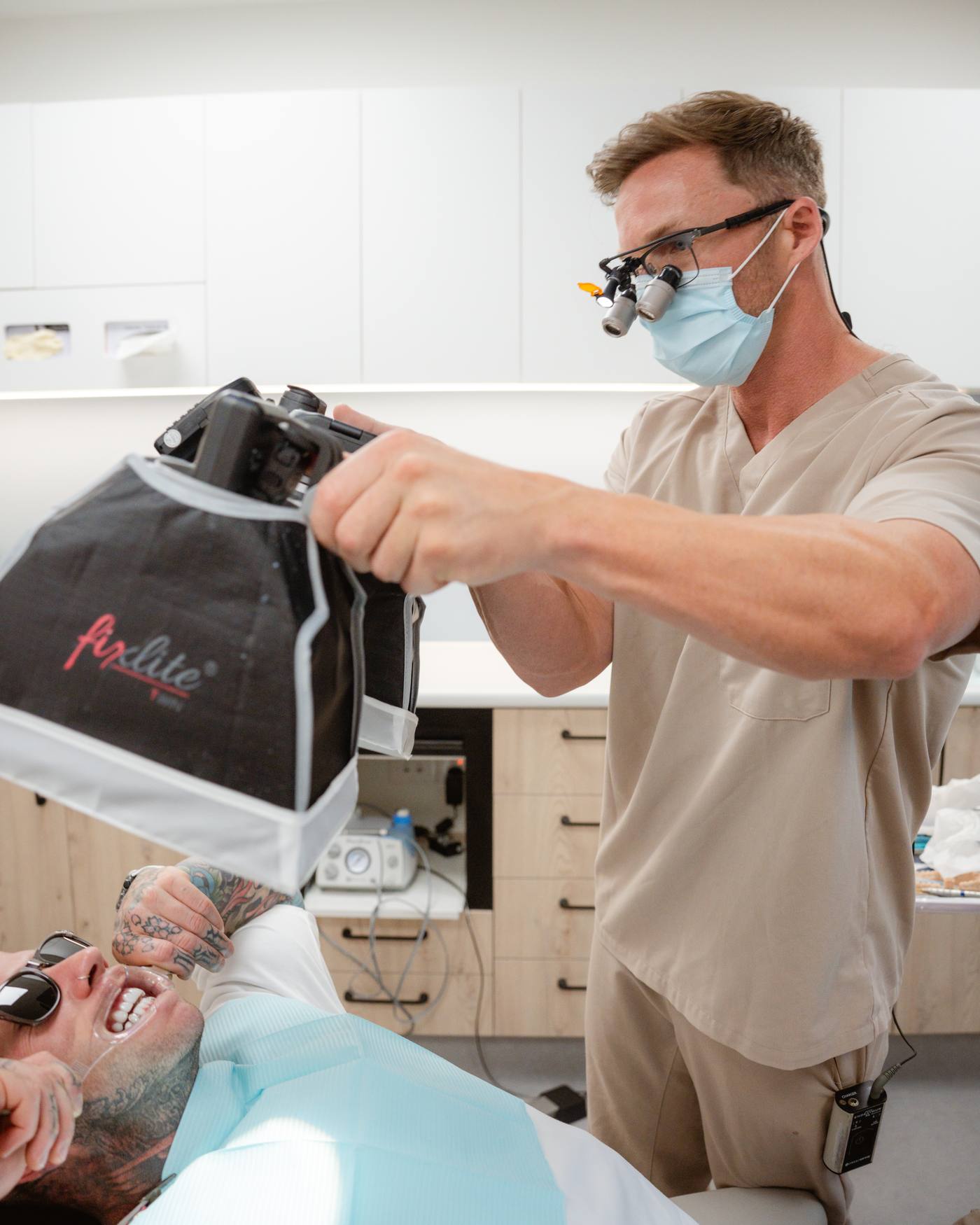
Composite resin bonding is one of the more conservative cosmetic treatments available, and in many cases it can be completed in a single appointment.
Finding time for lengthy dental treatment is not always easy. Composite resin bonding is one of the more conservative cosmetic options available, and in many cases it can be completed in a single appointment. Where the concern is a chipped edge, a small gap or a patch of discolouration, bonding can improve the look of a tooth without the extensive preparation that other treatments require.
Looking for treatment rather than background? See composite bonding at Helix Dental for what one appointment involves, what it costs and the risks.
This article covers what composite resin bonding is, the cosmetic concerns it can address, how it differs from veneers and crowns, what happens during the appointment, and how to look after bonded teeth afterwards. Whether bonding suits your teeth is a clinical decision, and your dentist will assess this with you.
Composite resin bonding, sometimes called cosmetic bonding or direct composite restoration, is a procedure in which a tooth-coloured resin is applied to the tooth, sculpted into shape by hand, and then set using a curing light. The resin is shade-matched to your natural enamel so that it blends with the teeth around it.
Unlike more invasive treatments, bonding usually requires little or no removal of tooth enamel, so most of your natural tooth structure is preserved. Treatment time depends on how many teeth are involved and how detailed the shaping needs to be, but the aesthetic change is visible at the end of the same appointment.
Composite resin bonding is a versatile treatment that may be used to improve the appearance of:
Bonding can be used on a single tooth or across several teeth for a more even appearance. It is not suitable for every situation — heavily broken-down teeth, significant crowding or decay that extends deep into the tooth generally need a different approach, and your dentist will tell you if that is the case.
Composite bonding is generally faster and less invasive than veneers or crowns. Porcelain veneers typically require two or more visits and involve removing a layer of natural enamel before a custom-made shell is fitted — a change that cannot be reversed. Crowns are more extensive again, requiring the tooth to be reshaped substantially.
Bonding, by contrast, often does not require drilling or local anaesthetic, can frequently be completed in one visit, and in many cases does not permanently alter the underlying tooth. If you are looking for a lower-impact cosmetic option with an immediate visual result, bonding is worth discussing. The trade-off is that composite is a softer material than porcelain and will need more upkeep over time.
The process begins with a consultation and smile assessment, where your dentist checks that the teeth involved are healthy and that bonding is a sensible choice. A resin shade is then selected to match your existing teeth as closely as possible.
Once the shade is chosen, the surface of the tooth is lightly roughened and conditioned so the resin can adhere properly. The composite is applied directly to the tooth and sculpted into shape. This stage is detailed work, because the aim is to reproduce the natural contour and surface texture of a tooth rather than simply fill a space. A curing light then hardens the resin, and the bonded area is trimmed, shaped and polished to a smooth finish.
Anaesthetic is often not required, because little or no enamel is removed, but comfort varies from person to person and anaesthetic can be used if you want it. Sensitivity afterwards is possible. Your dentist will talk you through what to expect for your particular case.
The main practical advantage of bonding is convenience: there is no laboratory-made component to wait for and usually no need for multiple appointments. The benefits patients most often value are:
Bonding can also suit people who are new to cosmetic dentistry and would prefer a reversible or interim option before considering anything more permanent.
Composite bonding is not a permanent restoration. It is less hard-wearing than porcelain, and the material will typically need maintenance, repair or replacement over time. How long it lasts depends on your bite, your oral hygiene, your diet, and whether you grind your teeth or bite hard objects.
The practical advantage is that composite is straightforward to repair. If the resin chips or picks up staining, your dentist can usually polish, touch up or replace the bonding without removing further natural tooth structure. If clenching or grinding is contributing to wear, addressing jaw clenching and grinding first will give any cosmetic work a better chance.
Dental resin used for bonding is softer than natural enamel and considerably softer than porcelain, so how strong composite bonding is depends on where it sits and what you ask of it. On front teeth, where biting forces are lower, a well-placed bond can last for years. On surfaces taking heavy chewing or clenching load it will wear faster, and your dentist may recommend a different restoration instead.
Because resin is added rather than cut away, bonding is well suited to additive work: composite build-ups that restore shape and length to teeth shortened by wear, and composite bonding on front teeth to even out edges, close small gaps or mask a chip. It is also one option for tooth bonding where enamel loss from grinding, acid erosion or a developmental defect has left the surface thin or uneven. Whether dental bonding for enamel loss is appropriate depends on how much sound tooth remains, so it needs an examination first. Individual results vary and are not guaranteed.
Composite bonding at Helix Dental averages $350 to $600 per tooth. The final figure depends on how many teeth are treated and how detailed the shaping needs to be, so an accurate quote can only be given after your dentist has examined your teeth. Full pricing and what is included is set out on our composite bonding page.
Bonding is generally the lower-cost option among cosmetic treatments for chips, gaps and surface marks, because it is usually completed in one visit and does not involve laboratory work. Porcelain veneers cost considerably more per tooth and require enamel to be removed permanently. That trade-off matters: bonding costs less and is reversible, but it is softer than porcelain and will need maintenance sooner. Which represents better value over time depends on your teeth and what you want to change, and is worth discussing at a consultation.
Caring for bonded teeth is largely the same as caring for natural ones, though the resin can pick up stain and show wear over time. A few habits help:
Composite bonding is a cosmetic procedure and, like any dental treatment, it carries risks. The ones your dentist will discuss with you include:
Fuller information about cosmetic treatment, its risks and the alternatives is set out in our treatment disclaimer and risk overview. Whether bonding is suitable for you can only be determined by a dentist after an examination.
Helix Dental is a general and cosmetic dental practice at 2/299 Rio Vista Blvd, Mermaid Waters. Our dentists take time to assess the teeth involved, select a resin shade, and shape each bonded surface with attention to how it sits alongside your natural teeth.
Composite bonding is a cosmetic procedure and is not right for everyone. At your consultation we will explain what bonding can realistically change, what it cannot, what the alternatives are, and what maintenance to plan for — so you can decide with a clear picture of the outcome. Call 07 5572 8969 or email hello@helixdental.com.au to arrange an assessment.
General information only. This page provides general information about dental treatment and is not a substitute for individual clinical advice. Whether any treatment is suitable for you can only be determined by a dentist after an examination. Results and recovery vary from person to person and are not guaranteed.
Any surgical or invasive procedure carries risks. Before proceeding, you should seek a second opinion from an appropriately qualified health practitioner.
Good to know
Most cases are completed in a single appointment. How long it takes depends on how many teeth are involved and how detailed the shaping needs to be, so your dentist will give you an estimate at the consultation.
You may notice a slight difference in texture at first. Once the bonded area has been trimmed and polished it generally feels similar to the surrounding tooth, and most people stop noticing it within a few days.
In most cases yes. Because bonding usually involves little or no removal of enamel, it can often be adjusted or taken off without damaging the underlying tooth. Your dentist will confirm what applies to your teeth.
The resin can pick up staining over time, particularly with frequent coffee, tea, red wine or tobacco. Good daily cleaning, regular professional cleans and limiting staining substances all help reduce this.
In many cases yes. Small to moderate gaps can often be closed by adding resin to the adjacent teeth. Larger gaps, or gaps caused by the position of the teeth rather than their shape, may be better addressed with clear aligners. Your dentist will assess which applies to you.
It is usually the lower-cost cosmetic option for chips, gaps and surface marks, at an average of $350 to $600 per tooth in one visit. It is softer than porcelain and will need maintenance or replacement sooner, so the comparison over a longer period depends on your bite and habits. Individual results vary and are not guaranteed.
Contact the practice. Bonding is usually straightforward to repair, and the affected area can often be smoothed, touched up or re-bonded without removing further natural tooth structure.
Ask our Gold Coast dentists whether bonding suits your teeth on 07 5572 8969 or email hello@helixdental.com.au.
Book a Consult