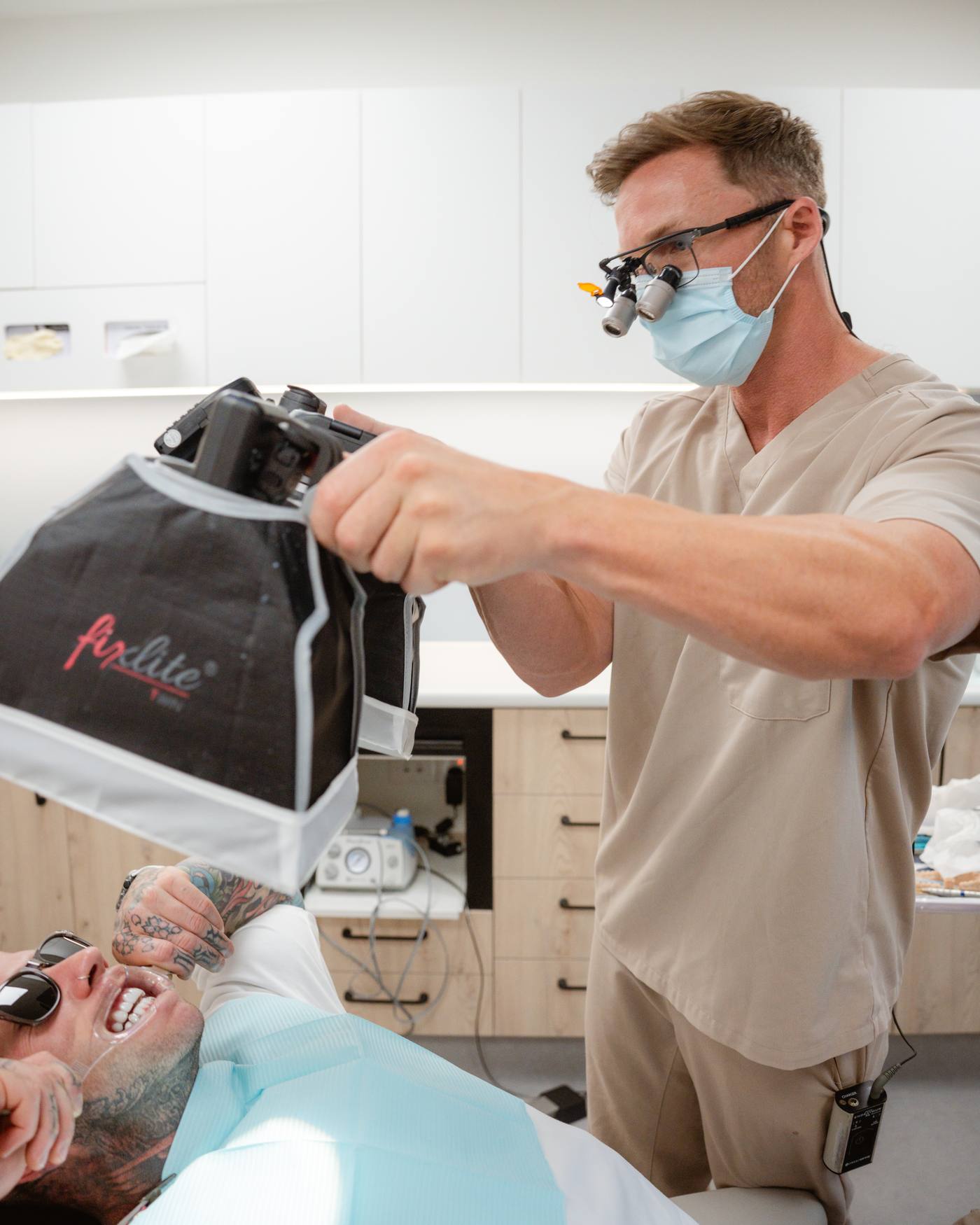
Inhalation sedation, better known as laughing gas, is one way dentists help anxious patients get through treatment. Here is what it does and what it does not do.
Dental anxiety is common, and for some people it is the single reason treatment gets postponed year after year. Modern dentistry has a number of ways to make appointments easier to get through, and inhalation sedation, widely known as laughing gas or happy gas, is one of the better known of them. If you have been putting off treatment, this article explains what laughing gas is, how it works, how it feels and what side effects to expect.
Laughing gas is a colourless, faintly sweet-smelling medical gas that is breathed in through a small nosepiece and mixed with oxygen. It is a mild sedative rather than an anaesthetic. It does not put you to sleep and it does not numb the tooth; local anaesthetic still does that job. What it does is take the edge off anxiety, so the appointment feels shorter and less confronting.
Because the gas is a regulated medicine, Australian advertising rules limit how much can be said publicly about the specific product used and its effects. Your dentist will go through it properly with you in person, including whether it is appropriate given your medical history.
The sequence at an appointment is straightforward:
The concentration is adjusted throughout the appointment, so the level of sedation can be increased or decreased depending on how you are going.
Side effects are usually mild and short-lived, but they do occur. They can include:
Inhalation sedation is not suitable for everyone. It may be unsuitable if you have certain respiratory conditions, a blocked nose on the day, some vitamin deficiencies, or during early pregnancy. Your dentist will take a full medical history and assess whether it is an option for you.
Sedation of this kind is generally considered where anxiety would otherwise prevent treatment, for longer appointments, for people with a strong gag reflex, and for procedures such as fillings, wisdom teeth removal and minor surgical work. It is also one of the tools used to help nervous children through treatment, alongside a slower pace and plenty of explanation, as part of children's dentistry.
Sedation is not the only answer, and it is often not the first one. Longer appointment times, agreeing a stop signal, explaining each step before it happens, morning appointments, and simply building familiarity through short, routine visits all help. Many people find that a straightforward check-up and clean with a dentist who takes the anxiety seriously is enough to make the next appointment easier.
Helix Dental is a cosmetic and general dental practice at 2/299 Rio Vista Blvd, Mermaid Waters. If dental anxiety has been keeping you away, tell us when you book. Our dentists will talk through what is involved, work at a pace that suits you, and discuss which comfort and sedation options may be appropriate for your situation.
To arrange an appointment, call 07 5572 8969 or email hello@helixdental.com.au.
General information only. This page provides general information about dental treatment and is not a substitute for individual clinical advice. Whether any treatment is suitable for you can only be determined by a dentist after an examination. Results and recovery vary from person to person and are not guaranteed.
Any surgical or invasive procedure carries risks. Before proceeding, you should seek a second opinion from an appropriately qualified health practitioner.
Good to know
It is generally considered for fillings, longer restorative appointments, wisdom teeth removal and minor surgical work, and for people with a strong gag reflex or significant dental anxiety. Your dentist will assess whether it is appropriate for your treatment and medical history.
Onset is quick and so is recovery. Once the gas is stopped and you breathe oxygen for a few minutes, the effects usually fade. Your dentist will tell you whether you are able to drive after your appointment.
No. It reduces anxiety and can make discomfort easier to tolerate, but numbing the tooth is still done with local anaesthetic. The two are commonly used together.
It is used for children in some circumstances, alongside a slower appointment pace and clear explanation. Whether it is appropriate depends on the child, the treatment and their medical history, and is a decision made with the parent or guardian.
Tell us when you book on 07 5572 8969, or email hello@helixdental.com.au, and we will take the appointment at your pace.
Book a Consult